The modern photography market is an endless engine of temptation. Every few months, manufacturers announce a new camera body with more megapixels, faster autofocus, or a revolutionary zoom lens that promises to cover every focal length from wide-angle to telephoto. It is easy to fall into the trap of Gear Acquisition Syndrome (GAS), believing that the missing ingredient in your art is simply a piece of hardware you don't yet own.
But in street photography, abundance is a prison. A large camera bag filled with multiple lenses doesn't give you choices; it gives you decision fatigue.
If you want to experience the true essence of the flâneur—to wander the city with a mind that is entirely open to observation—you must deliberately strip away the excess. You need to commit to the ultimate creative restriction: one camera body and one single prime lens.
The Weight of Expectations
When you walk onto the street carrying a massive DSLR or a large mirrorless setup with a heavy 24-70mm f/2.8 zoom lens, you change the dynamic immediately. You physically feel the weight on your shoulder, which slows you down over hours of walking. More importantly, you look like a professional on an assignment, or a conspicuous tourist.
A giant lens acts as a visual alarm on the sidewalk. It draws attention from blocks away, triggering people's defenses and ruining candid moments before you even raise the camera to your eye. You cannot blend into the background when you are carrying a studio on your neck.
A minimalist setup—a compact camera paired with a small 35mm or 50mm prime lens—is nearly invisible. To the casual observer, you look harmless. You look like an amateur, a hobbyist, or someone simply documenting their walk. This perceived harmlessness is your passport to proximity. It allows you to operate unnoticed in spaces where larger cameras would cause instant friction.
Eliminating Decision Fatigue
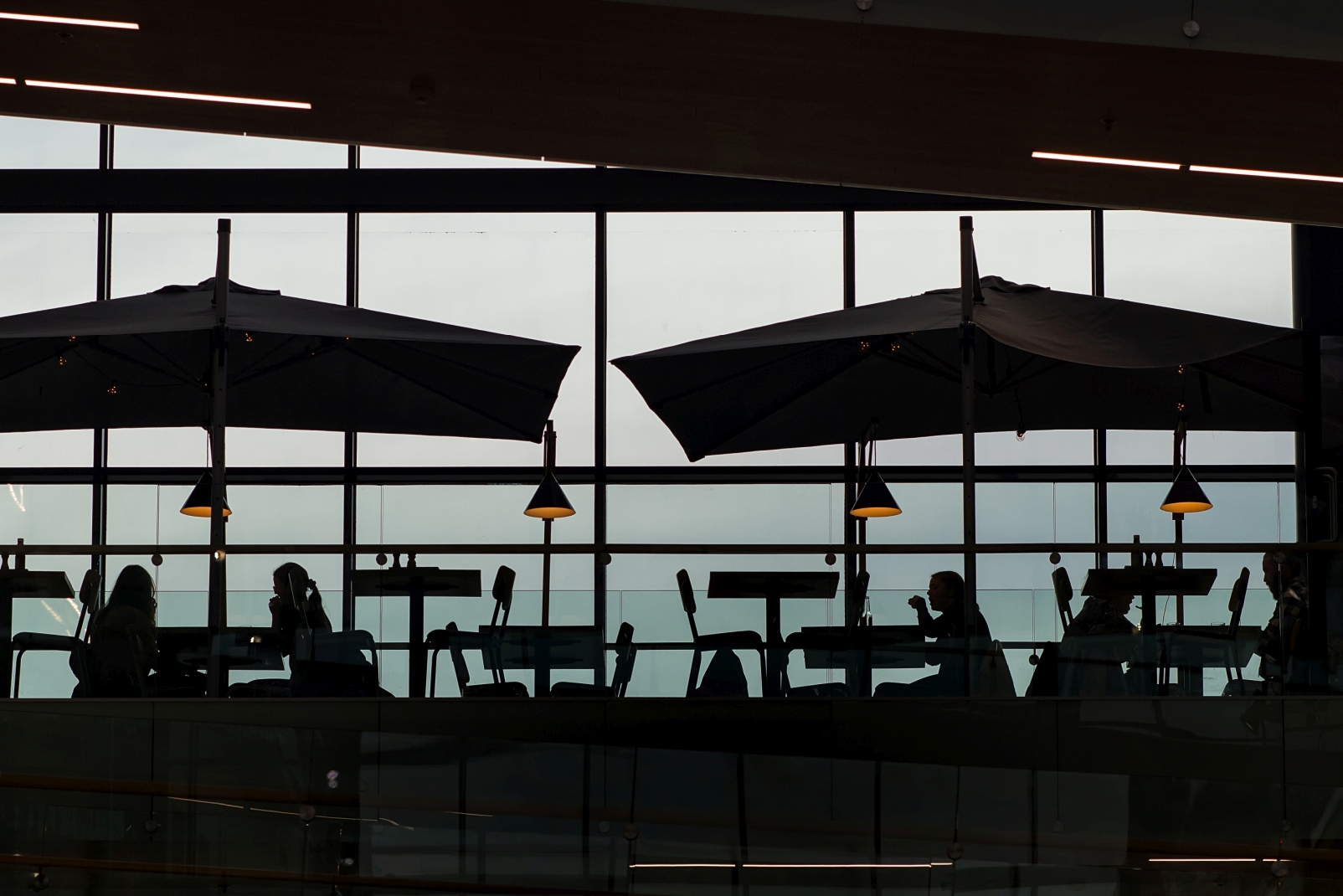
Imagine standing on a busy street corner when a beautiful silhouette begins to emerge in a pocket of light. If you have a zoom lens or multiple bodies, a cascade of rapid-fire technical questions floods your brain: Should I zoom in to 70mm for a tight portrait? Should I swap to my 24mm wide-angle to capture the architecture? What aperture should I use?
While you are debating focal lengths, the moment vanishes. Street photography happens in heartbeats; it does not wait for you to audit your gear.
When you restrict yourself to a single prime lens, that entire internal dialogue is eliminated. There is no zooming. There is no switching lenses. You know exactly what your frame looks like before you even look through the viewfinder because your eyes have adapted to that specific focal length. If you want the subject bigger, you must use "foot zoom" and take three steps closer. If you want more context, you take three steps back. Your physical movement becomes your composition tool, connecting you deeply to the physical environment.
Seeing the World in Fixed Focal Lengths
The most profound benefit of gear minimalism is cognitive. After a few weeks of shooting exclusively with a 35mm lens, a fascinating psychological shift occurs: you begin to see the world in 35mm.
As you stroll down the pavement, your brain automatically blocks out extraneous visual clutter and frames scenes naturally. You spot a geometric doorway and instinctively know exactly where you need to stand to make it fill your frame perfectly. By removing the variable of focal choice, you train your eye to become faster, sharper, and infinitely more precise.
Limiting your choices doesn't restrict your creativity; it focuses it. It forces you to stop thinking about equipment and start thinking about light, geometry, story, and shadow—the actual raw materials of the Flâneur Method.
For your next five photo walks, pick your favorite prime lens, leave the camera bag at home, and carry your camera using a simple wrist strap. Strip away the choices, lighten your load, and let the simplicity set you free.