Ask a conventional photographer when the best time to shoot is, and they will almost always give you the same answer: the Golden Hour. They praise the soft, warm light of early morning or late evening when the sun is low, the skin tones are smooth, and the dynamic range is easily managed by any modern digital camera.
Conversely, they will tell you to avoid mid-day like the plague. They warn against harsh noon light, claiming it creates ugly, unmanageable contrasts, overexposed highlights, and bottomless black shadows that ruin photographs.
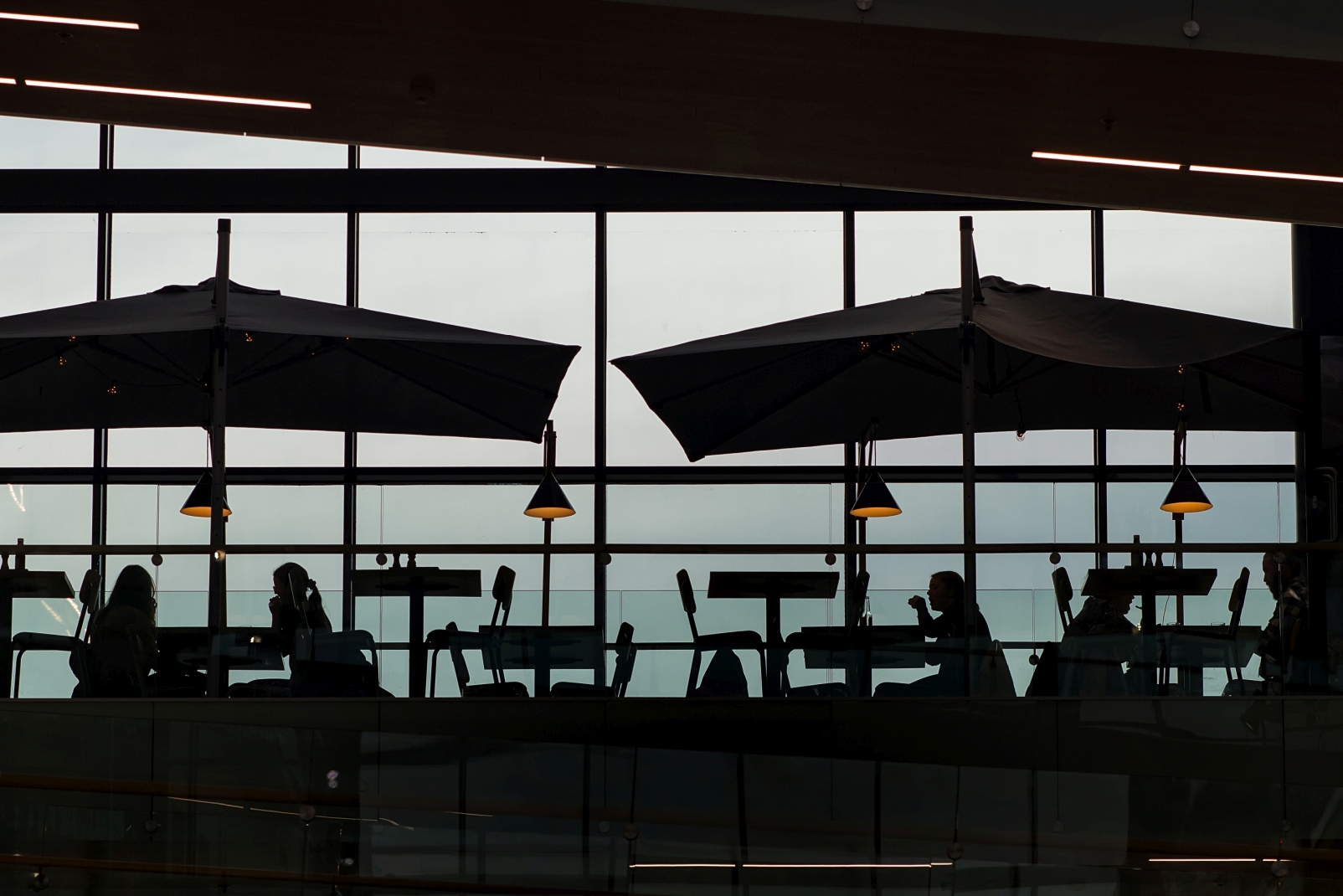
But for a practitioner of the Flâneur Method, harsh mid-day sunlight is not an obstacle. It is an extraordinary opportunity. When the sun is high and bright, the city is transformed into a high-contrast theatre of pure abstraction. If you know how to configure your camera and train your eyes, you can leverage this "bad" light to create dramatic, deeply poetic street silhouettes.
Exposing for the Highlights
The number one mistake photographers make in high-contrast urban spaces is letting the camera make the decisions. If you shoot in automatic or standard matrix metering mode at noon, your camera’s computer will look at the massive architectural shadows and try to brighten them up. In doing so, it will completely blow out the bright areas, turning the concrete sidewalks into blinding, textureless sheets of pure white.
To capture dramatic shadows, you must do the exact opposite: expose for the highlights and let the shadows fall into total darkness.
Switch your camera to spot metering or manually adjust your exposure compensation dial down (often between -1 and -2 EV steps). Look through your viewfinder at the brightest pool of sunlight on the street. Your goal is to make sure that the texture of that illuminated concrete is perfectly preserved. The moment you protect that highlight, the surrounding architectural shadows will instantly clip into dense, ink-like blacks. You have successfully stripped away the unnecessary visual noise of the city, leaving behind a pristine, minimalist canvas.
The Geometry of Shadows
When you embrace high-contrast shooting, you stop looking at objects and start looking at shapes. A shadow cast by a glass skyscraper is no longer just a dark area; it becomes a massive black blade slicing diagonally across the avenue. A fire escape on a brick wall turns into an intricate abstract pattern drawn with pure darkness.
Look for locations where modern architecture creates clean transitions between light and dark. Concrete steps, underpasses, concrete plazas, and narrow alleyways are perfect for this. Seek out sharp boundaries where a pedestrian must physically cross a threshold from complete darkness into brilliant light.
By positioning yourself at a low or straight-on angle to these geometric divides, you can frame a composition where half the image is entirely black and the other half is brilliantly lit. This structural duality creates immense tension and visual drama.
Crafting the Perfect Silhouette
Once your high-contrast stage is set and your exposure is locked to the bright zone, the final step is capturing the human element as a silhouette.
For a silhouette to be effective, it needs to have a strong, readable outline. Because the shadow side of the subject will be completely black, you cannot rely on facial features or clothing details to tell the story. You rely entirely on form and posture.
Wait for individuals who have a distinct shape or prop—someone wearing a long trench coat that catches the wind, a person carrying a crisp umbrella, or a commuter walking with a sharp, elongated stride. The ideal moment to press the shutter is during the "peak stride," when the subject's legs are fully separated in a triangular stance and their arms are clear of their torso. This separation ensures that the human shape remains recognizable and graphic against the light background, rather than collapsing into an ambiguous black blob.
Embrace the Darkness
Do not fear losing shadow detail. In quiet street photography, what you choose to hide is just as important as what you choose to reveal. By burying the clutter of the city in deep architectural blacks, you invite the viewer to use their imagination. You turn a mundane city street into a timeless, cinematic mystery.
Pack your camera, head out at noon when the sun is at its harshest, and start chasing the shadows.